Rising electricity prices are often the first thing homeowners think about when considering solar. However, another factor is becoming just as important in 2026: poor planning.
A solar system is a long-term investment, and decisions made before installation can affect performance for many years. Choosing the wrong system size, overlooking future energy needs, or focusing only on the lowest price can all influence the value you receive from your investment.
At Prosolar Global, we help Victorian homeowners design solar systems that are built around their current lifestyle and future energy requirements.
Many households are investing in solar to gain greater control over their energy usage. Yet some homeowners discover later that their system does not fully meet their expectations.
In many cases, the issue is not the quality of the solar panels themselves. Instead, the problem often begins with planning decisions made before the installation even starts.
Quick Answer
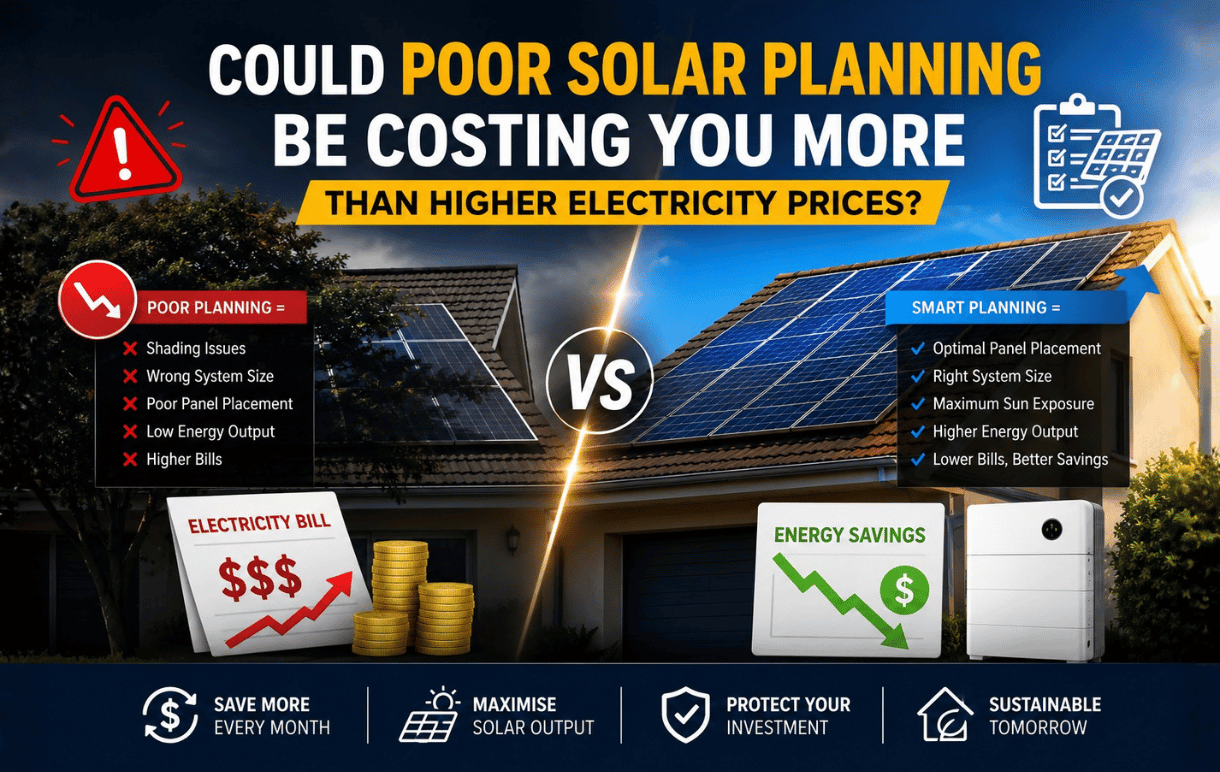
Yes, poor planning can cost homeowners more than rising electricity prices. A poorly designed system may generate less electricity, limit future upgrades, increase reliance on the grid, and reduce the long-term value of your investment.
Why Is Solar Planning So Important?
Installing solar is about more than placing panels on a roof. Every home has different energy requirements, usage patterns, and long-term goals.
Your Current Energy Habits Matter
Understanding how your household uses electricity is essential.
Important factors include:
- Average daily electricity consumption
- Daytime and evening energy usage
- Seasonal changes in demand
- The number of people living in the home
A system that matches these requirements is more likely to deliver stronger long-term performance.
Future Energy Needs Should Not Be Ignored
The average household uses more electricity today than it did only a few years ago. Many Victorian families are planning for:
- Electric vehicle charging
- Battery storage systems
- Home offices
- Additional appliances
- Increased use of heating and cooling systems
Planning for future demand can help prevent expensive upgrades later.
The Cheapest Option Is Not Always the Best Value
A lower price may seem attractive at first, but it can sometimes lead to compromises in areas such as:
- Equipment quality
- Warranty coverage
- Installation standards
- Battery compatibility
- Monitoring capabilities
Long-term performance often depends on the overall quality of the solution.
Roof Design Can Affect Performance
Every roof is different.
Several factors can influence how efficiently a system operates, including:
- Roof orientation
- Roof pitch
- Available installation space
- Shading from trees or nearby buildings
These details should always be considered before installation begins.
What Benefits Can Better Planning Deliver?
Careful planning can help homeowners maximise the value of their investment.
Key Benefits Include
- Better long-term system performance
- Improved energy efficiency
- Greater flexibility for future upgrades
- Increased compatibility with battery storage systems
- Better preparation for electric vehicle charging
- Improved control over household energy usage
A carefully planned system can continue meeting a household’s needs for many years.
Common Questions Homeowners Ask
Is a larger solar system always better?
No. A larger system is not always the most suitable choice. The ideal size depends on household energy consumption and future requirements.
Why is roof orientation important?
Roof orientation influences the amount of sunlight received by solar panels, which directly affects electricity production.
Should I prepare for battery installation?
Many homeowners choose battery-compatible systems because they provide greater flexibility in the future.
Does installation quality matter?
Yes. Even high-quality equipment may not perform efficiently if it is not installed correctly.
How often should energy usage be reviewed?
It is a good idea to review your energy needs whenever major lifestyle changes occur.
What Victorian Homeowners Should Consider
Before investing in solar, take the time to evaluate your long-term goals.
Review Your Current Electricity Usage
Look at:
- Monthly electricity bills
- Peak usage periods
- Seasonal energy patterns
- Existing energy costs
Think About Future Changes
You may be planning to:
- Purchase an electric vehicle
- Install a battery
- Renovate your home
- Expand your household
Compare Complete Solutions
When reviewing quotes, examine:
- Equipment quality
- Warranty coverage
- Installation experience
- Monitoring systems
- Future upgrade options
Seek Professional Advice
An experienced installer can assess your property and recommend a solution designed around your specific needs.
Key Takeaways
- Poor planning can reduce the long-term value of a solar investment.
- Household energy habits should influence system design.
- Future energy needs are becoming increasingly important.
- Installation quality can affect system performance.
- Battery compatibility can improve future flexibility.
- Victorian homeowners should look beyond the upfront price.
Conclusion
Higher electricity prices are not the only factor affecting household energy costs. Poor solar planning can also reduce efficiency, limit future opportunities, and affect the value of your investment for years to come. If you are considering solar, contact Prosolar Global on 1300 181 191 and speak with an expert about designing a system that meets both your current and future energy needs.