Quick Answer
Small commercial solar systems typically suit businesses with lower energy demand, while larger systems
are designed for higher electricity consumption and greater roof space. The right system depends on
your energy usage, roof space and business requirements, rather than business size alone.
Small vs large commercial solar systems can vary significantly depending on a business’s electricity consumption, operating hours, available roof space and future energy requirements. A small business and a large commercial facility may both want to reduce their reliance on grid electricity, but their solar requirements can be very different.
The difference between small and large commercial solar systems is not simply the number of panels installed. The right system size should be based on how much electricity a business uses, when that energy is consumed, the available roof space, system capacity and potential changes in future energy demand. A properly sized system can help businesses make better use of their available solar generation and align the system with their energy needs.
Small Commercial Solar Systems: Who Are They For?
A smaller commercial solar system may suit businesses with moderate electricity requirements. For example:
- Small offices
- Retail stores
- Cafés and restaurants
- Small workshops
- Medical or professional practices
These businesses may have lower overall electricity consumption or limited suitable roof space.
However, a small business can still have high energy demand. Refrigeration, air conditioning and specialised equipment can significantly increase electricity use.
That is why business type alone should not determine system size.
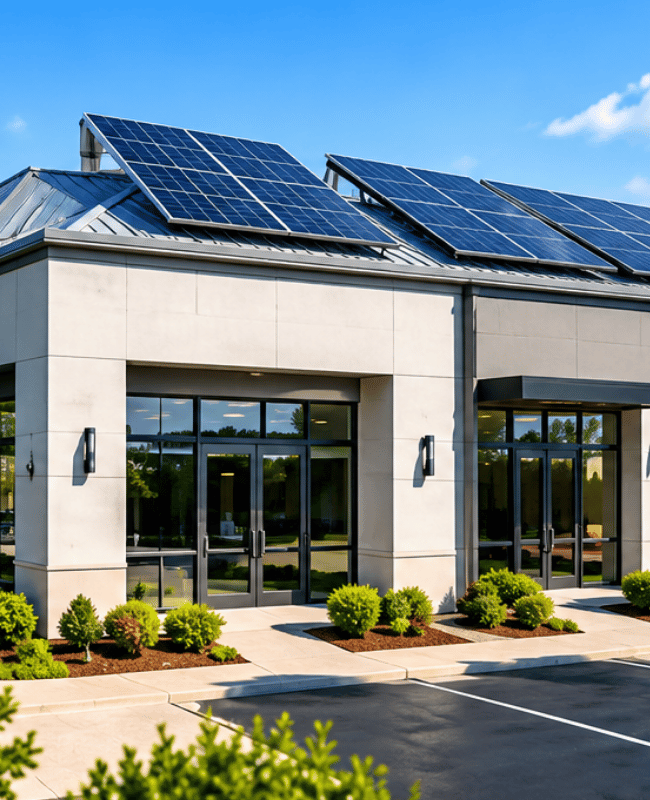
Large Commercial Solar Systems: What Makes Them Different?
Larger commercial solar systems are generally designed for businesses with greater electricity requirements.
They may be suitable for:
- Warehouses
- Manufacturing facilities
- Large retail sites
- Distribution centres
- Large commercial buildings
- Businesses with energy-intensive equipment
These systems often involve more detailed planning because electricity demand, roof conditions and system requirements can be more complex.
Bigger Does Not Always Mean Better
A larger system may generate more electricity, but the most
important question is: Can your business make effective use of that energy?
How Does System Design Change With Size?
As commercial solar systems become larger, planning can become more detailed. Businesses may need to consider:
- Panel layout
- Roof structure and available space
- Shading
- Electrical infrastructure
- Inverter configuration
- Monitoring requirements
- Future expansion
A larger installation may also need more careful coordination around business operations and site access.
What About Battery Storage?
Battery storage can be considered with both small and large commercial solar systems. For suitable businesses, batteries may help store excess solar energy for later use. However, the decision should depend on:
- When the business uses electricity
- How much excess solar is generated
- Evening or after-hours energy demand
- Future energy requirements
A larger solar system does not automatically mean a larger battery is needed.
Common Questions Businesses Ask
1. How do I know what size commercial solar system I need?
The right size depends on your electricity consumption, operating hours, roof space and future energy plans.
2. Is a larger commercial solar system always more valuable?
Not necessarily. The value of the system depends on how well it matches your business’s energy needs.
3. Can a small business install a large solar system?
Potentially, depending on site conditions and electricity requirements. The business should first assess whether the system is suitable for its energy profile.
4. Can a commercial solar system be expanded later?
Some systems may be expanded, depending on roof space, electrical infrastructure and equipment compatibility.
What Victorian Businesses Should Consider?
Before deciding between a small or large commercial solar system, review:
- Current electricity bills
- Daily and seasonal energy consumption
- Peak electricity demand
- Business operating hours
- Major energy-consuming equipment
- Available roof space
- Future expansion plans
- Potential battery or EV charging requirements
The best commercial solar system is not necessarily the smallest or largest option. It is the one designed around how your business actually uses energy.
Key Takeaways
- Commercial solar systems should be sized around energy demand, not business labels.
- Small businesses can sometimes have significant electricity requirements.
- Larger systems require more detailed planning and system design.
- Bigger is not always better.
- Battery storage may be suitable for businesses of different sizes.
- Future growth should be considered before installation.
Conclusion
The difference between a small and large commercial solar system goes beyond panel numbers and roof space. The right system should match your business’s electricity use today while considering future growth and changing energy needs.
If your Victorian business is considering commercial solar, contact Prosolar Global on 1300 181 191 for a tailored assessment and quote based on your energy requirements.